By admin / 12 Aug 2026
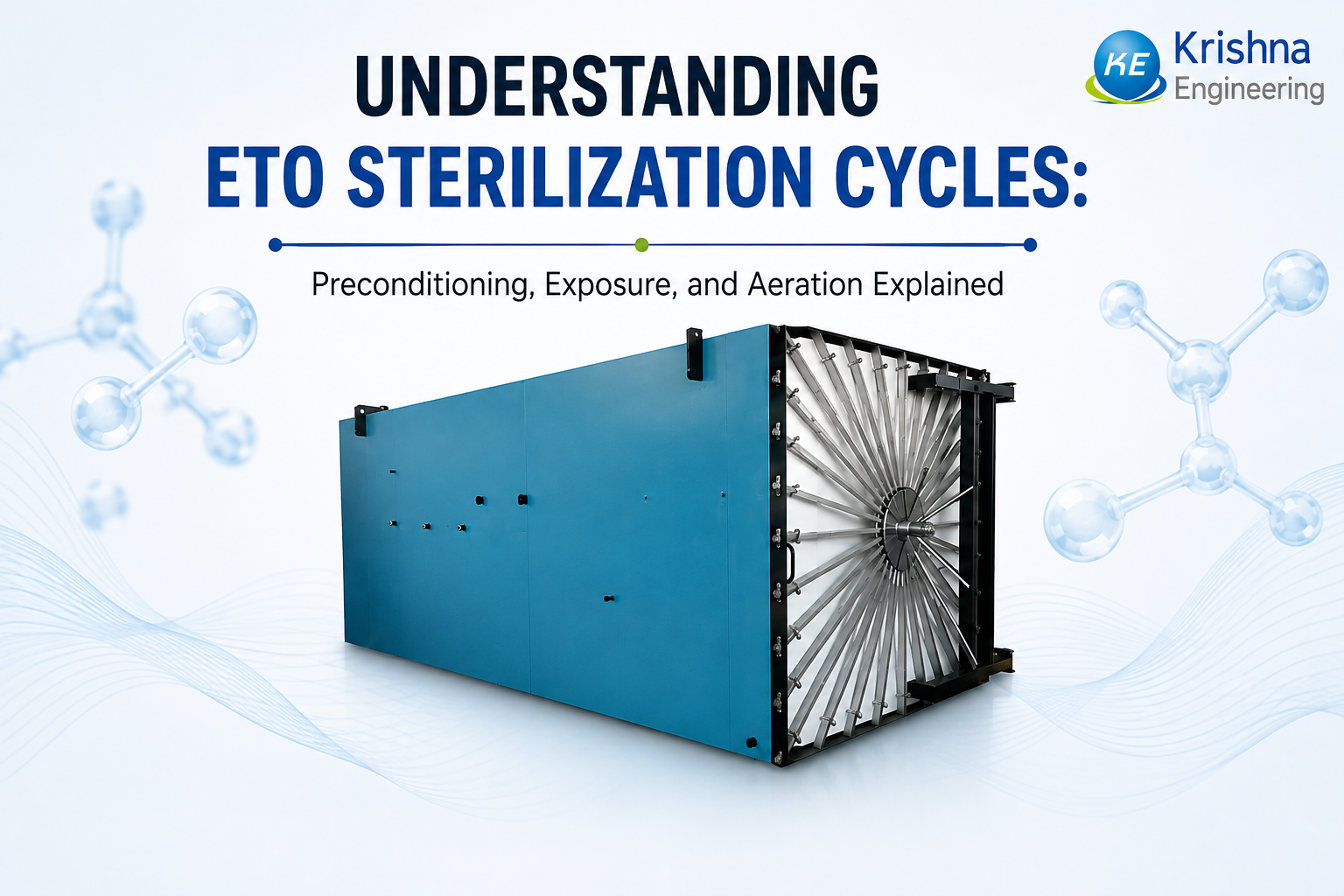
Understanding ETO Sterilization Cycles: Preconditioning, Exposure, and Aeration Explained
In the medical device industry, maintaining sterility isn't just a quality requirement—it's a critical patient safety standard. Among various sterilization modalities, Ethylene Oxide (ETO) sterilization remains the gold standard for heat-sensitive, moisture-sensitive, and intricate devices. From complex catheters and surgical kits to optical scopes, ETO penetrates deep into packaging without causing thermal degradation.
However, ETO sterilization is far more than simply soaking items in gas. It is a tightly controlled, highly dynamic thermodynamic process. A standard ETO sterilization cycle consists of three primary, distinct phases: Preconditioning, Exposure (or Gas Injection & Sterilization), and Aeration.
Phase 1: Preconditioning (Conditioning)
The primary goal of preconditioning is to prepare both the product and the chamber atmosphere for the gas introduction. Ethylene oxide is most effective in a warm, moist environment; attempting to introduce gas to cold, dry materials yields poor, inconsistent microbial kill.
What Happens During Preconditioning?
- Temperature Stabilization: The sterilization load is brought to a uniform temperature—typically between 37°C and 63°C (98°F to 145°F).
- Humidity Control: Humidity is adjusted to relative humidity (RH) levels between 40% and 80%. Water vapor acts as a catalyst; it swells dormant bacterial spores and softens cell walls, making them vulnerable to the sterilizing gas.
- Vacuum Pull: Once temperature and humidity stabilize within the sealed chamber, a deep vacuum is pulled to remove air. Eliminating air prevents dilution of the gas and lowers the explosion risk associated with flammable EtO mixtures.
Key Takeaway: Without proper preconditioning, bacterial spores remain hardened and resistant, severely compromising the lethality of the entire cycle.
Phase 2: Exposure (Gas Injection & Dwell Time)
Once the chamber achieves the desired pressure, temperature, and moisture balance, the exposure phase begins. This is where active microbial destruction occurs.
1. Gas Injection
Pure Ethylene Oxide (or a blended non-flammable gas mixture, such as EtO/CO2) is vaporized and injected into the chamber. As the gas floods the chamber, internal pressure increases until the specified target gas concentration is reached—typically 400 to 800 mg/L.
2. Dwell Time (Sterilization Hold)
The product remains exposed to the gas at constant temperature and pressure for a defined period, ranging from 1 to 6 hours, depending on the load density and bioburden level.
During dwell time, ETO operates via alkylation. The gas replaces hydrogen atoms within essential biological molecules (such as DNA, RNA, and proteins) with alkyl groups. This action disables the microorganism's metabolic functions and reproductive capability, resulting in complete microbial death.
3. Evacuation & Nitrogen Washes
Once the exposure time ends, the chamber undergoes a post-exposure vacuum to draw out the bulk of the ETO gas. To safely flush residual gas from the vessel, alternating cycles of nitrogen gas flushes and vacuums (known as nitrogen washes) are executed.
Phase 3: Aeration (Post-Sterilization Degassing)
Though the product is sterile at the end of Phase 2, it is far from safe for human contact. Ethylene oxide is toxic and readily absorbed by plastics, rubbers, and packaging materials. The final phase, Aeration, removes these hazardous chemical residues.
How Aeration Works
Aeration involves circulating warm, filtered air over the sterilized product—either inside the main chamber or, more commonly, within a dedicated, heated aeration room.
- Temperature: Maintained between 30°C and 60°C to accelerate the desorption rate of the gas.
- Air Changes: Heated, HEPA-filtered air is continuously pumped into the space, sweeping off desorbed EtO gas and routing it to catalytic oxidizers or scrubbers for safe disposal.
Frequently Asked Questions (FAQs)
1. What types of medical devices require ETO sterilization?
ETO sterilization is used primarily for heat- and moisture-sensitive items that cannot tolerate steam autoclaving or gamma radiation. This includes polymers, plastics, electronics, optical lenses, resin-based products, and multi-component kits like catheters, stents, surgical suits, and endoscopes.
2. How long does a typical ETO sterilization cycle take?
A full ETO cycle generally takes between 12 to 72 hours from start to finish. While the actual gas exposure phase lasts only 1 to 6 hours, preconditioning (temperature/humidity stabilization) and post-exposure aeration (degassing to remove chemical residues to safe levels) take up the majority of the time.
3. Why is moisture (humidity) required during ETO sterilization?
Ethylene oxide gas cannot penetrate dry bacterial cell walls or dormant bacterial spores effectively. Preconditioning the load to a relative humidity of 40% to 80% swells the spore walls, acting as a catalyst that allows the ETO gas to easily penetrate the cells and disrupt their DNA through alkylation.